
This ultra creamy One Pot Mac and Cheese is smooth, cheesy, and absolutely indulgent, with perfectly cooked pasta and a rich, velvety sauce made with three kinds of cheese. I started making this on weeknights when I needed something comforting and fast that everyone would love, and it's become one of our most-requested dinners. Everything cooks in one pot in about 25 minutes—the pasta simmers right in the milk, cream, and stock, then gets mixed with cream cheese, cheddar, Gruyere, and mozzarella until it's incredibly creamy and gooey. There's no baking, no draining, and no multiple pots to wash.

If you love easy, satisfying meals, you'll also want to try my Creamy Sausage Rigatoni, Smash Burger Recipe, and for something lighter, my Ricotta Stuffed Zucchini.
Why You'll Love This One Pot Mac and Cheese
Ready in 25 minutes. From start to finish, this mac and cheese comes together fast. Perfect for busy weeknights when you need comfort food in a hurry.
One pot, minimal cleanup. Everything cooks in one pot, which means less time washing dishes and more time enjoying dinner.
Ultra creamy and cheesy. The combination of cream cheese, cheddar, Gruyere, and mozzarella creates a sauce that's rich, smooth, and incredibly indulgent.
No baking required. This is stovetop mac and cheese, so you don't need to turn on the oven or wait for it to bake.
Comfort food perfection. Creamy, cheesy, and satisfying. This is the kind of mac and cheese that makes everyone happy.
Jump to:
One Pot Mac and Cheese ingrediants
Here's everything you need to make this ultra creamy One Pot Mac and Cheese.
See Recipe Card Below This Post For Ingredient Quantities
- Dried macaroni: Elbow macaroni is classic, but you can use shells, cavatappi, or any short pasta shape you like.
- Milk: Use whole milk at room temperature for the creamiest results. Room-temperature milk prevents the sauce from breaking or becoming grainy.
- Chicken stock: Adds subtle depth and savory flavor that makes the mac and cheese taste richer. You can substitute water if you prefer.
- Heavy cream: This is what makes the sauce ultra creamy and velvety. Make sure it's at room temperature before adding it to the pot.
- Salt: Seasons the pasta and the sauce. Adjust to taste based on how salty your stock and cheese are.
- Mustard powder: Adds a subtle tang that enhances the cheese flavor without making the sauce taste like mustard.
- Onion powder, garlic powder, white pepper: These seasonings add savory depth and complexity without overpowering the cheese.
- Cream cheese: Melts into the sauce and makes it extra smooth and creamy. Use room-temperature cream cheese so it melts easily without lumps.
- Medium cheddar: Shredded cheddar is the base of the cheese sauce. It melts smoothly and adds that classic, sharp mac and cheese flavor.
- Gruyere: Grated Gruyere adds a nutty, slightly sweet flavor that makes this mac and cheese taste gourmet and sophisticated.
- Mozzarella: Shredded mozzarella adds a stretchy, gooey texture that makes every bite irresistible.
How to Make One Pot Mac and Cheese
Here's how to make this ultra creamy One Pot Mac and Cheese from start to finish.
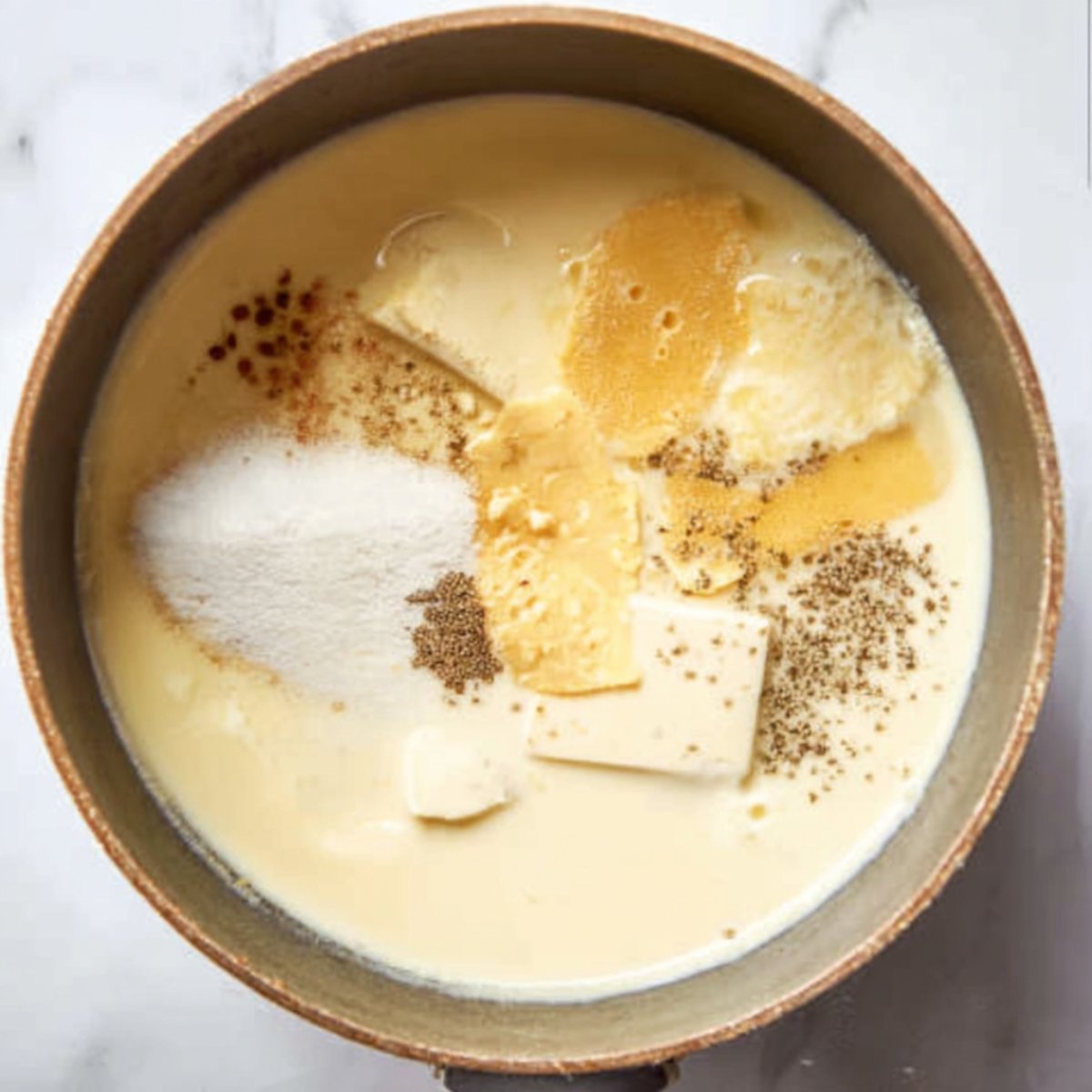
- Cook the pasta: Place the dried macaroni in a large, deep pot. Pour in 2 ½ cups (600 ml) of room-temperature milk, the chicken stock, and the heavy cream. Stir in the mustard powder, garlic powder, onion powder, salt, and white pepper. Bring the mixture to a gentle simmer over medium heat, stirring occasionally to prevent the pasta from sticking to the bottom. Cook until the macaroni is al dente, which usually takes about 10 to 12 minutes. If the liquid evaporates before the pasta is fully cooked, add a splash more milk as needed.
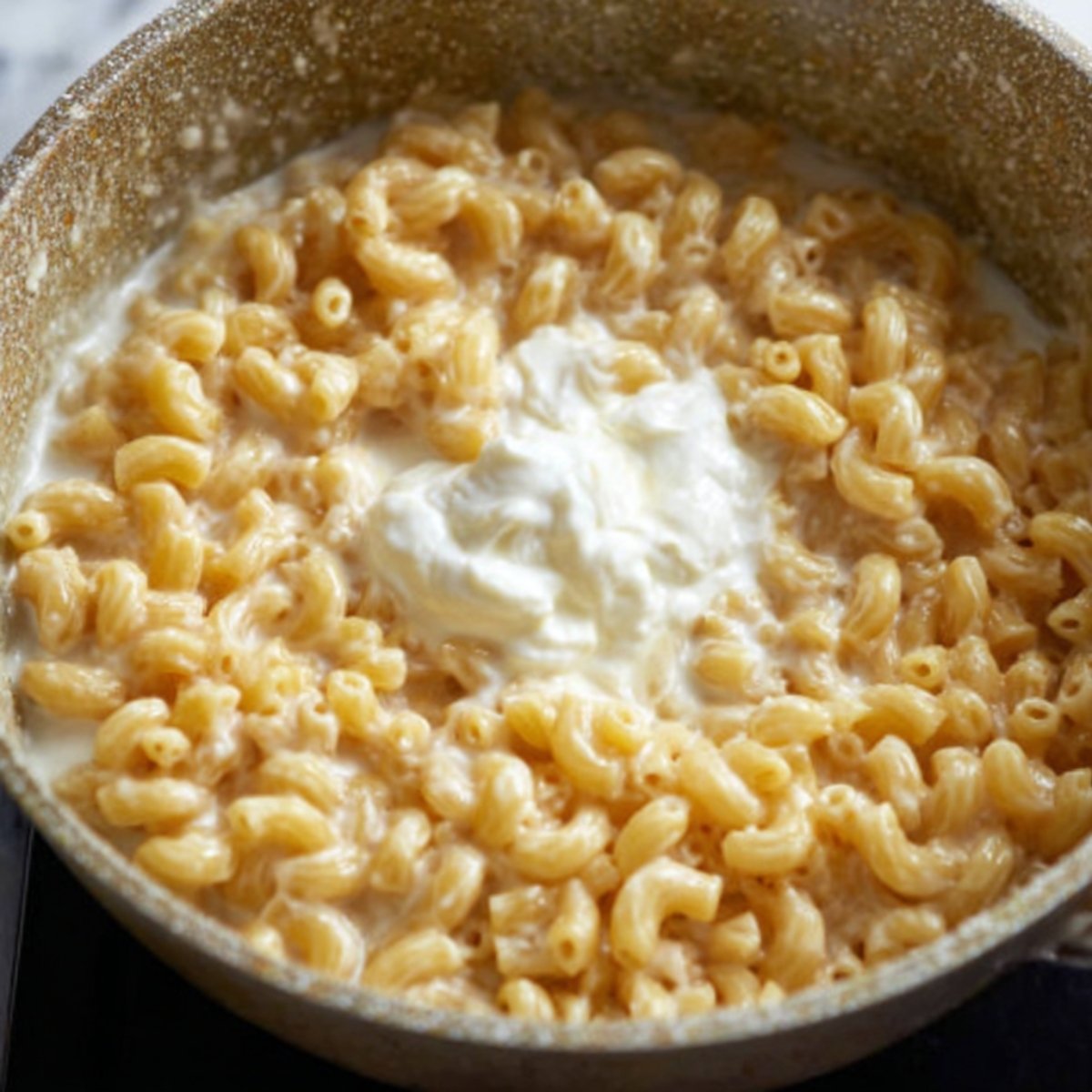
- Make the cheese sauce: Once the pasta is cooked and most of the liquid has been absorbed, reduce the heat to low. Stir in the room-temperature cream cheese and keep stirring until it's fully melted and incorporated into the sauce. Add the shredded cheddar and grated Gruyere, stirring constantly until the cheese melts and the sauce becomes smooth and velvety. Finally, stir in the shredded mozzarella for that stretchy, gooey texture. If the sauce is too thick or the cheese isn't melting properly, add warm milk one splash at a time, stirring constantly, until you reach your desired consistency.
- Adjust seasoning and serve: Taste the mac and cheese and adjust the seasoning if necessary. Add more salt, pepper, or a pinch of mustard powder if you like. Serve the mac and cheese immediately while it's hot, creamy, and at its best. The sauce will thicken slightly as it sits, so enjoy it right away for maximum creaminess.
Substitutions and Variations
Different pasta shapes: Use shells, penne, cavatappi, or rotini. Just adjust the cooking time as needed since different shapes cook at different rates.
Add protein: Stir in cooked bacon, shredded rotisserie chicken, diced ham, or crumbled sausage for a heartier meal.
Add vegetables: Mix in steamed broccoli, peas, roasted cauliflower, or sautéed mushrooms for extra nutrition.
Make it spicy: Add a pinch of cayenne pepper, diced jalapeños, or a few dashes of hot sauce for heat.
Different cheese combinations: Try fontina, gouda, Swiss, or sharp white cheddar for different flavor profiles.
Make it lighter: Use half-and-half instead of heavy cream and reduce the amount of cheese slightly. It won't be quite as rich, but it'll still be delicious.
Equipment
Large pot: A deep, heavy-bottomed pot with plenty of room for the pasta and sauce to cook without boiling over.
Wooden spoon: For stirring the pasta and cheese sauce as it cooks.
Jug for stock: To measure and pour the chicken stock into the pot.
Cheese grater: Freshly grated cheese melts much smoother than pre-shredded cheese, which contains anti-caking agents that can make the sauce grainy.
Storage and Reheating Tips
Refrigerator: Store leftover mac and cheese in an airtight container in the fridge for up to 3 days. The sauce will thicken as it cools, which is normal.
Freezer: You can freeze mac and cheese for up to 2 months in a freezer-safe container. The texture may change slightly when reheated, but it's still delicious.
Reheating: Reheat on the stovetop over low heat, stirring frequently and adding a splash of milk or cream to loosen the sauce and bring back the creamy texture. You can also reheat individual portions in the microwave for 1 to 2 minutes, stirring in a tablespoon of milk before heating.
Sauce thickens over time: The pasta absorbs the sauce as it sits, so leftover mac and cheese will be thicker and less creamy. Just add warm milk when reheating to restore the creamy consistency.
Serving Suggestions
As a main dish: Serve generous portions with a simple green salad or roasted vegetables on the side.
As a side dish: Pair with grilled chicken, steak, meatloaf, or my Smash Burger Recipe for a complete comfort food meal.
For a potluck: Double the recipe and bring it to a party. Mac and cheese is always a crowd-pleaser.
With breadcrumbs on top: For extra texture, transfer the mac and cheese to a baking dish, top with buttered breadcrumbs, and broil for 2 to 3 minutes until golden and crispy.
Expert Tips
Use room-temperature dairy. This is crucial. Cold milk and cream can cause the sauce to seize, separate, or become grainy. Let them sit at room temperature for 30 minutes before cooking.
Grate your own cheese. Pre-shredded cheese contains anti-caking agents like cellulose that prevent smooth melting. Freshly grated cheese melts into a silky, creamy sauce.
Don't boil aggressively. Cook the pasta at a gentle simmer, not a rolling boil. High heat can cause the dairy to separate and the sauce to break.
Stir frequently. Stirring prevents the pasta from sticking to the bottom of the pot and helps the cheese melt evenly into the sauce.
Add milk gradually. If the sauce is too thick, add warm milk a little at a time, stirring constantly, until you reach your desired consistency.
Serve immediately. Mac and cheese is best when it's hot and freshly made. The sauce thickens as it sits, so enjoy it right away for the creamiest texture.
FAQ
The key to ultra creamy mac and cheese is using a combination of milk, cream, and multiple types of cheese, including cream cheese for extra smoothness. Cooking the pasta directly in the liquid instead of draining it helps the sauce stay creamy. Using room-temperature dairy and freshly grated cheese prevents graininess. Stirring frequently and cooking at a gentle simmer (not a boil) ensures the sauce stays velvety and smooth.
Yes, and you should. Using room-temperature milk and cream is essential for preventing the sauce from becoming grainy or separating. Cold dairy can cause the proteins in the cheese to seize when they hit the heat, which results in a broken, grainy sauce. Let your milk and cream sit at room temperature for 30 minutes before using them, and you'll get a much smoother, creamier result.
The best combination is medium cheddar for classic flavor, Gruyere for nutty depth, and mozzarella for stretchiness. Cream cheese adds smoothness and helps bind the sauce. You can also use sharp cheddar for more flavor, fontina for creaminess, or gouda for a smoky note. Avoid using only one type of cheese—combining different cheeses creates more complex flavor and better texture.
To prevent graininess, use freshly grated cheese instead of pre-shredded, which contains anti-caking agents. Make sure your milk and cream are at room temperature before adding them. Cook the pasta at a gentle simmer, not a rolling boil, which can cause the proteins in the cheese to seize. Add the cheese over low heat and stir constantly until it melts. If the sauce starts to look grainy, add a splash of warm milk and stir vigorously to bring it back together.
Related
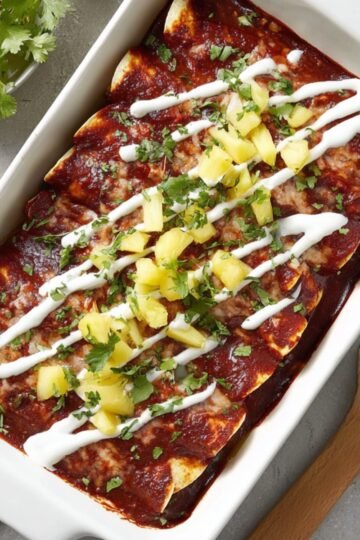
Looking for other recipes like this? Try these:



Pairing
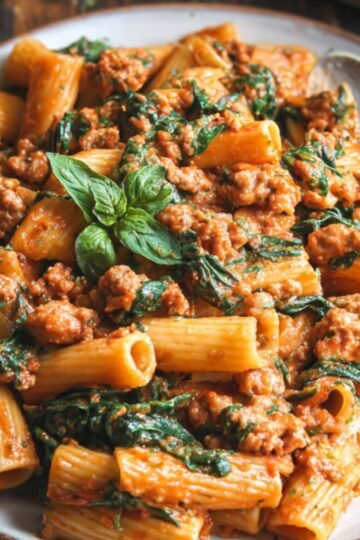
These are my favorite dishes to serve with [this recipe]:



One Pot Mac and Cheese
Ingredients
Method
- Add macaroni to a large pot, then pour in 2 ½ cups (600 ml) milk, all the chicken stock, and cream. Stir in mustard powder, garlic powder, onion powder, salt, and white pepper.
- Bring the mixture to a gentle simmer over medium heat, stirring occasionally. Cook until macaroni is al dente, adding extra milk gradually if liquid evaporates before pasta is tender.
- Reduce heat to low. Stir in the cream cheese until fully melted and smooth.
- Add the cheddar and Gruyère cheeses, then fold in the mozzarella. If sauce is too thick or cheese isn’t melting, add warm milk a splash at a time until desired creaminess is reached.
- Taste and adjust seasoning if needed. Serve immediately while warm and creamy.

Leave a Reply